Notes on Abby Innes
Humanist Economics as a Basis for Social Democracy

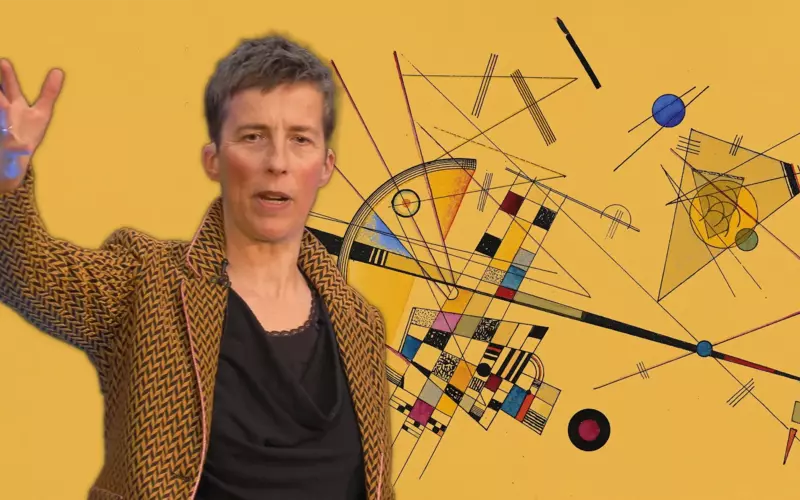
I watch a lot of lectures and panel discussions on YouTube. I don’t remember how she came up on my feed, but I ended up watching quite a few lectures and discussions with political economist Abby Innes, really enjoying—and agreeing with—a lot of what she has to say about the state of economics.
Abby Innes is Associate Professor of Political Economy in the European Institute at the LSE. She is the author of Czechoslovakia: The Short Goodbye (Yale University Press, 2001) and Late Soviet Britain: Why Materialist Utopias Fail (Cambridge University Press, 2023).
The talks I’ve watched key off her second book, which argues that British neoliberal economics converges with and mirrors Soviet economics. This owes to the fact that both run on utopian, rationalist ideals and end up bending reality to their ideology rather than vice versa. I have that book on my Kindle and plan to get to it, though there are several others in the queue ahead of it.
For now, I am not going to go into her larger argument. Instead, I will briefly sketch out remarks she made in two videos that point toward how to build a humanist economics—one that, in my estimation, should be the basis of a social democratic political economy.
Below are five points she made across two videos, with a bit of my own elaboration where she only briefly sketched an idea.
An economy is an ecosystem. It should be understood as such. An economy is much more like a garden than a watch. These are open, dynamic systems that are always changing ahead of our ability to model them statically.
Empiricism and pluralism over utopian rationalism. Rather than rational utopianism—theory- and model-driven assumptions about rational actors with uniform interests, perfect information, and liquid markets that always solve problems better than any alternative—we should be optimizing our economics for empiricism and pluralism.
That means using more observational economics and fitting our models to our observations, instead of just relying on theoretical models based on assumptions to tell us how the world is supposed to work.
We should assume that people have different, often competing (hence political), and always-changing interests. Collectively, though, we hold all the knowledge and wisdom available on any given issue. Therefore, pluralism—which requires strong opinions, lightly held, with room for disagreement and learning—is what we should optimize for, not a single unifying theory of everything.All economics is political economics. Some subfields, narrowly focused on how actors respond to specific incentives under tightly defined circumstances (like contract theory), are less political. But trade and macroeconomics are much more so. Economics is not about what models tell us we should be doing based on their assumptions about our interests. It is about asking, “What do we want the world to look like?” Then wemake collective, public decisions about how to get there, based on what we actually know about the world.
Models distract us from responsibility. A fixation on models allows us to dodge responsibility for the economic decisions we make politically. As she put it: “Let’s get away from small dreams of electric sheep and forecasting what the sheep are going to do.”
Keynes and uncertainty. Mid-20th-century Keynesian arguments were made from observation under conditions of uncertainty. Keynes did better than most of his contemporaries* at seeing the world as it was rather than how economics said it should be. Central to his method was recognizing that decisions—both for business and financial actors, and for policymakers—are always made under conditions of uncertainty about the future. He stressed that decisions made today must be made with the understanding that we do not necessarily know what the future holds.
These arguments are broadly humanist. I think they are also more specifically tied to social democratic political economy and ethics than merely broad progressive political economy, in their emphasis on empiricism, pragmatism, communitarianism, and of course the nod to bringing Keynes up to speed for the 21st century.
* Myrdal, Ohlin, and Lindahl of the Stockholm School preceded by Knut Wicksell and Gustav Cassel in Sweden and Jørgen Pedersen in Denmark sometime anticipated and influenced Keynes.